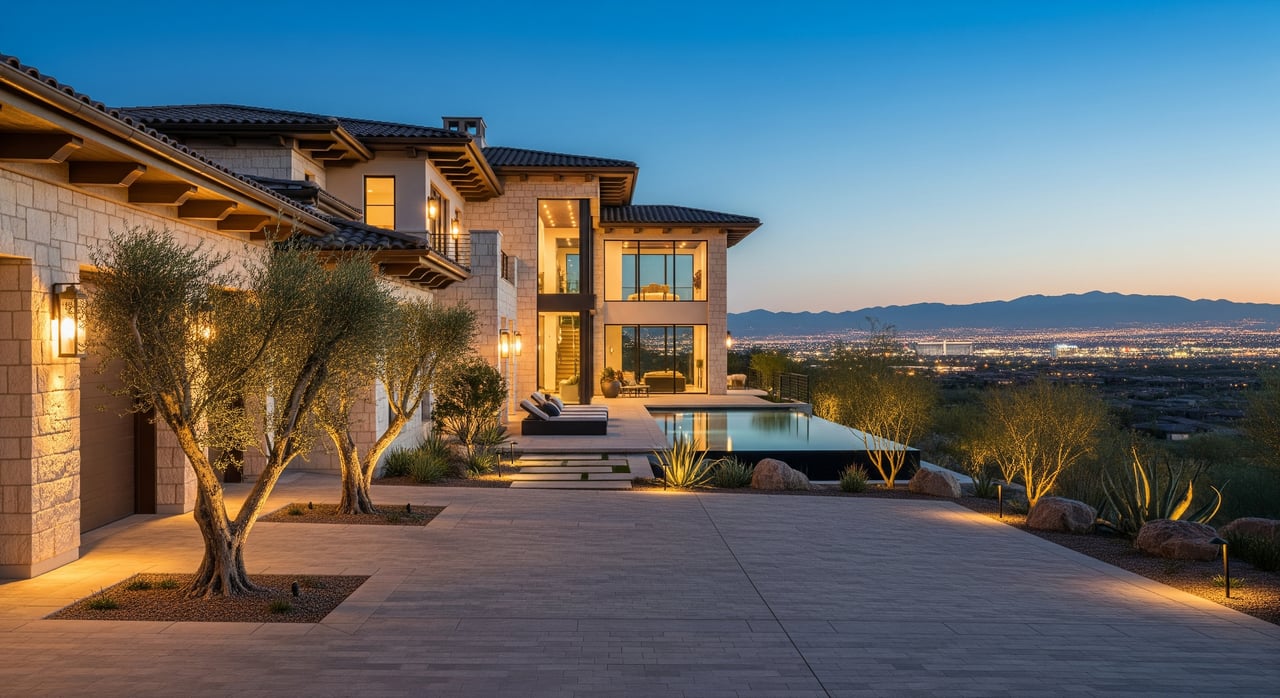
Want Strip views this year, or a legacy home tailored to your life? If you are exploring MacDonald Highlands, you are likely choosing between a finished spec home and a custom build on a premium lot. Both paths can deliver an incredible lifestyle, but the process, timing, and risk profile are very different. This guide compares your options so you can move forward with confidence. Let’s dive in.
Spec vs. custom at a glance
What is a spec home?
A spec home is built by a developer without a committed buyer. It may be move-in ready or under construction. You get speed, a fixed aesthetic, and a clear price. Customization is usually limited.
What is a custom home?
A custom home is designed and built to your specifications on a selected lot. You control the plan, orientation, and finishes. Expect a longer timeline and a more hands-on process with more decisions and potential change orders.
How MacDonald Highlands shapes the decision
MacDonald Highlands is an established luxury community in Henderson known for hillside estate lots, gated privacy, and sweeping views that can include the Las Vegas Strip. In this enclave, lot quality drives value. Orientation, view corridors, and privacy often outweigh simple square footage.
Luxury inventory moves differently than entry-level housing. Fewer sales and larger differences between properties can mean more price volatility. Buyers pay premiums for move-in-ready homes with top-tier finishes and for exceptional view lots. Custom builds price from your choices and scope rather than strict comparables, which can affect appraisals and financing.
You should also account for community governance. Expect HOA rules, CC&Rs, and gated-community fees. There may be country-club membership requirements or transfer fees tied to DragonRidge Country Club. Confirm dues, any special assessments, and exterior design or landscaping restrictions before you commit.
Timeline and process
Buying a finished spec home
- Identify the listing that fits your needs and views.
- Negotiate the purchase contract and price.
- Open escrow, complete title work, inspections, and disclosures.
- Close and move in.
Typical timing is similar to a resale purchase. If you use financing, plan for roughly 30 to 60 days to close after acceptance.
Buying a spec home under construction
- Contract directly with the builder and confirm allowances and specifications.
- Verify the construction schedule and completion percentage.
- Follow progress draws and staged inspections.
- Complete final walk, closeout, and closing.
Your timeline depends on build stage. Remaining work can range from weeks to several months. Remedies for delays should be clear in your contract.
Building a custom home on a lot
- Secure the lot and confirm building envelope and setbacks.
- Hire an architect or designer who knows MacDonald Highlands CC&Rs and local codes.
- Obtain HOA architectural approvals and city/county permits.
- Complete site work, including grading, utilities, and any retaining structures.
- Build the home: foundation, framing, enclosure, MEP systems, interiors, and landscaping.
- Perform final inspections, obtain the certificate of occupancy, and close out the punch list.
Expect several months for planning and permits. Construction commonly ranges from about one year to two years for high-end custom estates. Complexity, slope and soils conditions, and subcontractor scheduling all influence timing.
Costs and financing
What drives total cost
- Land or lot acquisition. View lots with strong orientation and privacy command meaningful premiums.
- Hard construction costs. Hillside sites often require engineered foundations, grading, retaining walls, and drainage solutions that increase costs.
- Soft costs. Architecture, engineering, permits, plan reviews, and impact fees.
- Professional fees and overhead. General contractor overhead, markup, and contingencies.
- FF&E and landscaping. Furnishings, art, pool design, outdoor kitchens, lighting, and hardscapes.
- Carrying costs. Interest on construction loans, insurance, property taxes, and HOA dues. For a spec purchase, include standard resale closing costs.
Spec vs. custom price dynamics
A finished spec price typically includes the developer’s risk and profit. You pay for speed and certainty. A custom build can be comparable on a per-square-foot basis if you control scope, but bespoke finishes, complex site work, and specialty systems can push the total higher. For either path, build in a realistic contingency. For luxury projects, 5 to 15 percent is a common planning range.
Financing paths
- Spec home. Often financed like a resale purchase with a conventional or jumbo mortgage.
- Custom build. Typically a construction loan that converts to permanent financing. Lenders want a detailed budget, builder qualifications, plans, and draw schedules.
Appraisals for custom homes can be challenging when direct comparables are limited. Lender confidence often relies on builder reputation and thorough cost documentation.
Appraisal and tax considerations
Not every custom feature returns dollar-for-dollar at resale. In MacDonald Highlands, lot quality and location are the main value drivers. Avoid over-improving beyond neighborhood norms. Discuss property tax implications with your advisors, since property taxes can reset based on final assessed value after completion.
Key trade-offs and lifestyle priorities
- Speed vs. control. A spec home wins on speed to occupancy and predictable timing. A custom build wins on control of plan, orientation, finishes, and unique features.
- Certainty vs. personalization. Spec homes offer a clear price and defined scope. Custom homes deliver personalization with more variability in schedule and cost.
- Risk tolerance. Custom projects require higher engagement and carry greater exposure to cost overruns or delays. You can reduce risk with fixed-price contracts, clear allowances, and tight change-order procedures.
- Resale path. Exceptional custom details may delight you but not every buyer later. Focus on lot quality, timeless architecture, and well-executed systems.
Builder selection checklist
Where to start
- Focus on builders with luxury experience and completed homes in MacDonald Highlands or similar hillside communities.
- Ask for a portfolio with photos and plans, plus references from recent clients you can call.
Qualifications to verify
- Licensing and local contractor registration.
- Insurance coverage for liability and workers’ compensation.
- Financial stability with supplier or bank references that confirm timely payment to subcontractors.
- Warranty program details that separate structural, systems, and finish coverage.
Contract structure and scope control
- Favor a fixed-price, fully specified contract when possible. If you use cost-plus, require a guaranteed maximum price and clear allowances.
- Document selections and allowances in detail with a clear change-order process.
- If timing is critical, include remedies such as liquidated damages for prolonged delays or materially deficient performance.
Communication and project management
- Establish a single point of contact and agree on weekly status updates with schedules and draw requests.
- Require electronic documentation of change orders, invoices, and approvals.
- Use a project-management platform that tracks schedule, budget vs. actual, RFIs, and submittals.
Quality verification
- Reserve the right to staged third-party inspections at key phases: structural, MEP, and energy.
- Plan for closeout inspections and an independent punch list before final payment.
- Ask about the builder’s internal quality controls and any third-party ratings.
Due diligence before you commit
- Title and legal. Confirm clear title, easements, and encumbrances.
- HOA and CC&Rs. Obtain full CC&Rs, design guidelines, and the architectural review process and timeline. Check rules on exterior materials, colors, and visible equipment like solar panels or generators.
- Lot and site. Order a topographic survey and confirm building envelope, setbacks, and solar orientation. For sloped or filled lots, get a geotechnical report to understand foundation and retaining-wall needs. Review drainage and stormwater requirements.
- Utilities and infrastructure. Verify water, sewer, gas, electric capacity and all connection fees. Confirm any off-site improvements required.
- Permits and timing. Ask the City of Henderson and Clark County about plan-check durations and permitting timelines for comparable luxury builds.
- Environmental and regulatory. Review flood zones, protected habitats, and any slope stabilization or rockfall mitigation requirements.
- Financial and tax. Clarify property tax basis now and after completion. Consider carry costs during a long build schedule.
- Insurance and liability. Confirm builder’s risk coverage during construction and review homeowners coverage appropriate for high-value assets.
- Appraisal and resale planning. Commission a feasibility appraisal or market study to support your budget and final value. Compare to recent sales in MacDonald Highlands that match your planned scale and finish level.
Which path fits your priorities
- Choose a finished spec if you want immediate occupancy, prefer not to manage construction, and find a home that matches your lifestyle and views. Confirm warranty terms and what is included in the delivered product.
- Choose a custom build if you envision a site-responsive design, unique spaces, or advanced technology that a spec rarely includes. Allow the time, establish a contingency budget, and hire an experienced local team early.
In either case, early due diligence pays off. Verify CC&Rs, run a feasibility appraisal, and quantify site costs before you sign.
Next steps in MacDonald Highlands
- Narrow your priorities. Decide whether speed, view orientation, architecture, or bespoke features matter most.
- If you lean spec. Target listings with the view and layout you want, and compare builder warranties and completion standards.
- If you lean custom. Secure the best lot within your budget, then assemble your team: architect, builder, and an owner’s representative or construction-savvy advisor.
- Protect your downside. Use contract terms that define scope, finishes, allowances, and remedies for delays, and set reporting expectations from day one.
Ready to compare specific options or walk lots with an experienced local advisor? Connect with Bryan Lebo for tailored guidance on spec opportunities, custom-lot evaluations, and contract strategies that protect your time and capital. If you are also considering a sale or portfolio move, request a Complimentary Luxury Home Valuation to plan your next steps.
FAQs
How long does it take to build a custom home in MacDonald Highlands?
- Plan-and-permit often takes several months, and construction for high-end estates commonly ranges from about one year to two years depending on complexity and site conditions.
What should I review in the MacDonald Highlands HOA documents before buying?
- Obtain CC&Rs, design guidelines, and the architectural review process and timeline. Confirm dues, any transfer fees, and restrictions on exterior materials, colors, and visible equipment.
How are construction loans different from jumbo mortgages for Henderson luxury homes?
- Construction loans fund draws during the build and convert to permanent financing; lenders require detailed budgets, qualified builders, and appraisals based on plans. Jumbo mortgages finance completed homes with standard closing timelines.
Can I customize a spec home in MacDonald Highlands?
- Customization is usually limited. Minor changes may be possible before final completion, but major structural or plan changes are uncommon and costly. Negotiate upgrades or credits instead.
How does a hillside lot affect budget and timeline for a custom build?
- Sloped sites often require engineered foundations, grading, retaining walls, drainage, and utility coordination that add cost and time beyond interior finish choices.
What inspections are most important for a new luxury build before closing?
- Early foundation and soils verification, mid-stage framing and MEP rough-ins, and late-stage systems commissioning for HVAC, pool, and home automation. Add third-party inspections and a thorough punch list before final payment.